Cherry blossoms in April, fireflies in June, autumn foliage in November — Kyushu has something spectacular every season. Here's exactly when to go based on what you want to experience.
Spring: March to May
Spring is widely considered the finest time to visit Kyushu. Cherry blossoms (sakura) arrive earlier here than anywhere else in Japan — typically late March in Fukuoka and Kumamoto, a full week or two before Tokyo. Hanami (flower-viewing) picnics fill Ohori Park and the grounds of Kumamoto Castle, and the crowds, while enthusiastic, are a fraction of what you'd find at Kyoto's famous spots.
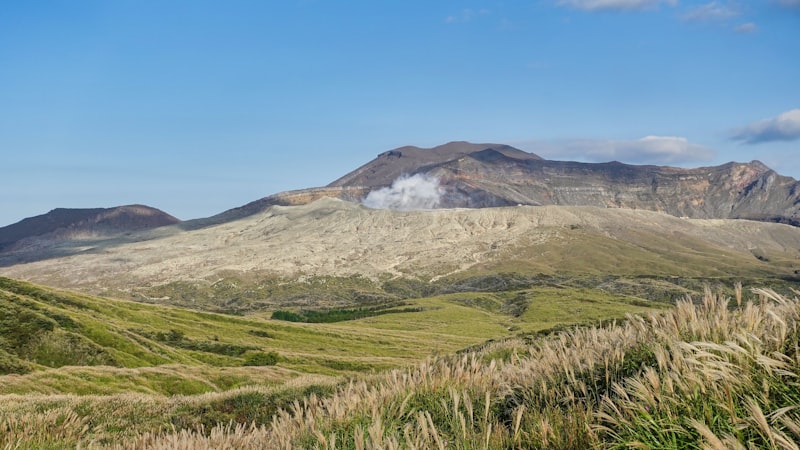
April brings ideal hiking conditions on Mt. Aso and in the Kirishima highlands — mild temperatures, long daylight hours, and wildflowers carpeting the caldera rim. May is perhaps the most balanced month of the year: warm enough for light clothing, cool enough for long walks, and free from the summer humidity that descends in June.
Summer: June to August
Summer in Kyushu is hot, humid, and spectacular in equal measure. June brings the tsuyu rainy season — a week or two of persistent drizzle that transforms Yakushima's ancient cedar forests into a cathedral of mist and moss. If you're visiting Yakushima, this is actually a great time: the waterfalls are thundering, the greenery is impossibly vivid, and the island's character feels most alive.
July and August are genuinely hot — expect 33–36°C in coastal cities with high humidity. That said, the festivals are extraordinary. Hakata Gion Yamakasa in Fukuoka (July) is one of Japan's most exhilarating summer festivals, with teams of men racing through the city carrying ornate floats weighing up to a tonne. The mountain resorts of Yufuin and Kurokawa Onsen offer cooler retreats. Be aware that late August to September is typhoon season — check forecasts carefully.
Autumn: September to November
Autumn rivals spring as Kyushu's best season. The humidity breaks in mid-September and temperatures settle into a perfect 18–25°C range. November's autumn foliage (koyo) transforms the mountain landscapes: Yufuin's basin fills with golden and crimson maples, Kurokawa Onsen's narrow lanes are framed by blazing persimmon trees, and the hiking trails on Kuju and Aso are ablaze with colour.
November also hosts the Saga International Balloon Fiesta — one of the world's largest hot-air balloon events. Hundreds of balloons rise over the Saga plain at dawn in conditions of breathtaking beauty. Book accommodation in Saga months in advance if you plan to attend.
Winter: December to February
Kyushu winters are mild by Japanese standards — Fukuoka rarely sees snow, and coastal towns like Beppu and Nagasaki stay above 5°C even in January. This is prime onsen season: soaking in an outdoor rotenburo while steam rises into cold air is one of Japan's great sensory experiences, and the ryokan of Kurokawa and Yufuin are at their most atmospheric.
Nagasaki's Lantern Festival in late January to February is a dazzling spectacle — the city's Chinese heritage comes alive with thousands of red lanterns, traditional performances, and street food stalls. Winter is also the cheapest time to travel, with accommodation rates significantly lower than spring or autumn peak periods.
Practical Tips for Timing Your Visit
- Cherry blossoms: Typically last-week March to first-week April in lowland cities; mid-April at mountain elevations. Check the Japan Meteorological Corporation's annual forecasts.
- Autumn foliage: Usually peaks in Kyushu between late October and mid-November, starting at higher elevations and moving down.
- Typhoon season: August–September. Most pass without direct impact, but have a contingency plan.
- Golden Week (late April to early May): Japan's busiest domestic travel period. Book trains and accommodation far in advance, or consider travelling the week before.
- Obon (mid-August): Another peak domestic travel period — Shinkansen can be fully booked weeks ahead.
Book Tours & Experiences
Kyushu onsen day passes, food tours, scenic train tickets and more.
Browse on KlookAffiliate link — we may earn a small commission at no extra cost to you.
Final Thoughts
Kyushu is the Japan that many travellers dream of but rarely find: authentic, unhurried, breathtakingly beautiful, and utterly original. It's a place where ancient traditions live comfortably alongside modern Japan, where you can soak in a private forest rotenburo at dawn and eat exceptional ramen from a street stall at midnight.
We hope this guide helps you plan an unforgettable visit. Feel free to explore our destination guides, ready-made itineraries, and ryokan recommendations for more detailed planning resources.