From a blood-red boiling pool to a pond where crocodiles bathe in geothermal water — Beppu's famous 'Jigoku Meguri' hell circuit is one of Japan's most unique attractions. Here's everything you need to know.
What Are the Beppu Hells?
Beppu produces more geothermal hot spring water than anywhere else in Japan — roughly 130,000 kilolitres per day from over 2,000 individual vents. Most of this water is channelled into the city's legendary network of bathhouses, but eight springs are so extreme in temperature, colour, or behaviour that they were designated as tourist attractions rather than baths. These are the Jigoku, or "Hells".
The Hells are spread across two clusters: six in the Kannawa district (a 15-minute bus ride from Beppu station) and two in the quieter Shibaseki area about 2km further north. A combined entry ticket covers all eight and is far better value than paying individually.
The Eight Hells, Explained
Umi Jigoku (Sea Hell) is the most iconic — a cobalt blue pool that looks impossibly tropical despite bubbling at 98°C. The vivid colour comes from dissolved silica (silicic acid) in the water. Lotus flowers bloom on the surface in summer in defiance of the heat. This is usually everyone's favourite.
Oniishibozu Jigoku (Shaven Head Hell) features large grey mud bubbles rising and popping with a satisfying glop, said to resemble the shaved heads of Buddhist monks. Shiraike Jigoku (White Pond Hell) is an eerily beautiful milky-white pool with a collection of tropical fish in the warm adjacent tanks. Kamado Jigoku (Cooking Pot Hell) has multiple pools at different temperatures and a theatrical demon mask at the entrance — children love it.
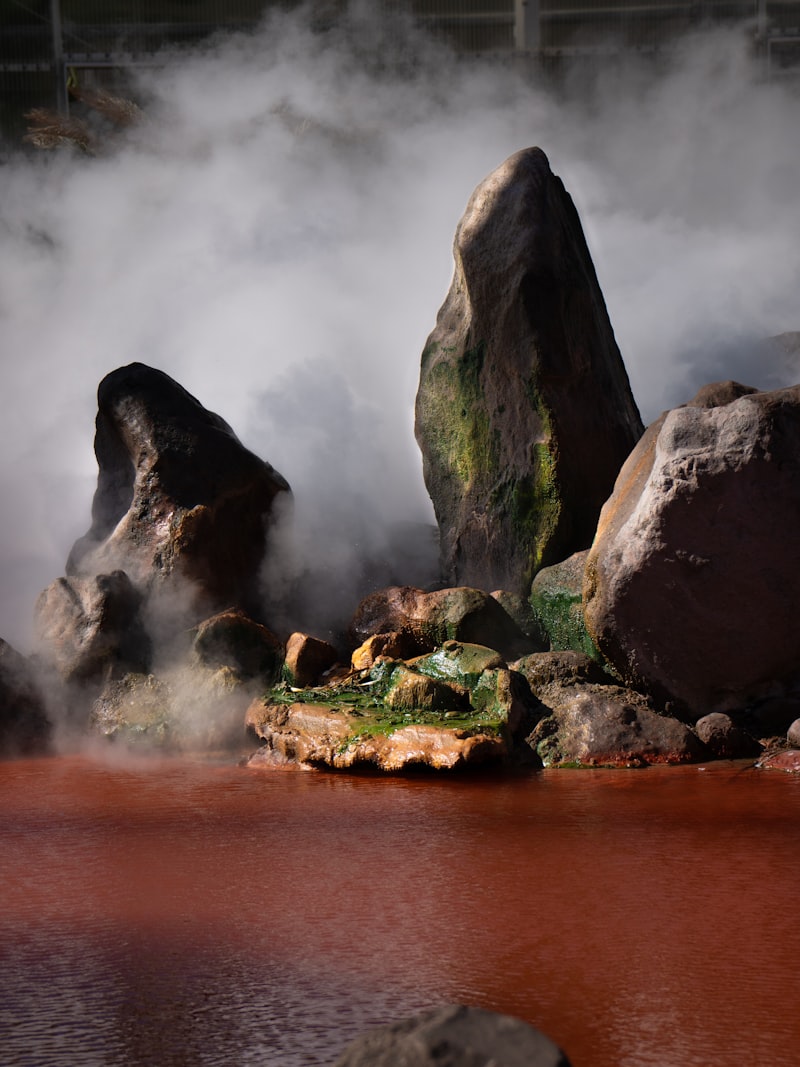
Oniyama Jigoku (Crocodile Hell) is home to over 100 crocodiles kept in pens warmed by geothermal water — bizarre, slightly unsettling, and utterly memorable. Yama Jigoku (Mountain Hell) is the smallest and least impressive, with hippos and flamingos in geothermally heated enclosures. Chinoike Jigoku (Blood Pond Hell) is perhaps the most dramatic — a vivid red pool caused by iron oxide and magnesium chloride, with a hellish landscape of red-stained rocks. Finally, Tatsumaki Jigoku (Waterspout Hell) features a geyser that erupts every 30–40 minutes, shooting boiling water 50 metres into the air before a stone arch caps it.
Practical Information
- Combined ticket: Covers all 8 hells and is far better value than paying individually. Check current prices on the official Beppu Jigoku website before visiting.
- Opening hours: Most Hells open 8am–5pm daily. Tatsumaki Jigoku sometimes has extended evening hours.
- Time needed: Allow 3–4 hours for all eight at a leisurely pace, including the taxi or bus between Kannawa and Shibaseki clusters.
- Getting there: Take the Kamewa Bus from Beppu station (about 20 minutes). Taxis between the two clusters are also available.
After the Hells: Kannawa's Steam District
The Kannawa district surrounding the northern Hells is one of the most atmospheric neighbourhoods in all of Japan. Geothermal steam vents from beneath the streets, drifting through the lanes at dusk in a scene that feels genuinely otherworldly. The area has excellent onsen (the public Hyotan Onsen is the best in Beppu), a handful of steam-cooked food stalls, and some of the city's most characterful ryokan.
Jigoku-mushi — "hell steaming" — is Beppu's unique cooking tradition. Restaurants use the natural geothermal steam to cook vegetables, seafood, puddings, and even eggs. Several spots around Kannawa offer hell-steaming workshops or set meals. The results are extraordinary: the steam cooking method preserves flavour and creates textures unlike anything achieved by conventional methods.
Book Tours & Experiences
Kyushu onsen day passes, food tours, scenic train tickets and more.
Browse on KlookAffiliate link — we may earn a small commission at no extra cost to you.
Final Thoughts
Kyushu is the Japan that many travellers dream of but rarely find: authentic, unhurried, breathtakingly beautiful, and utterly original. It's a place where ancient traditions live comfortably alongside modern Japan, where you can soak in a private forest rotenburo at dawn and eat exceptional ramen from a street stall at midnight.
We hope this guide helps you plan an unforgettable visit. Feel free to explore our destination guides, ready-made itineraries, and ryokan recommendations for more detailed planning resources.